Quick Summary
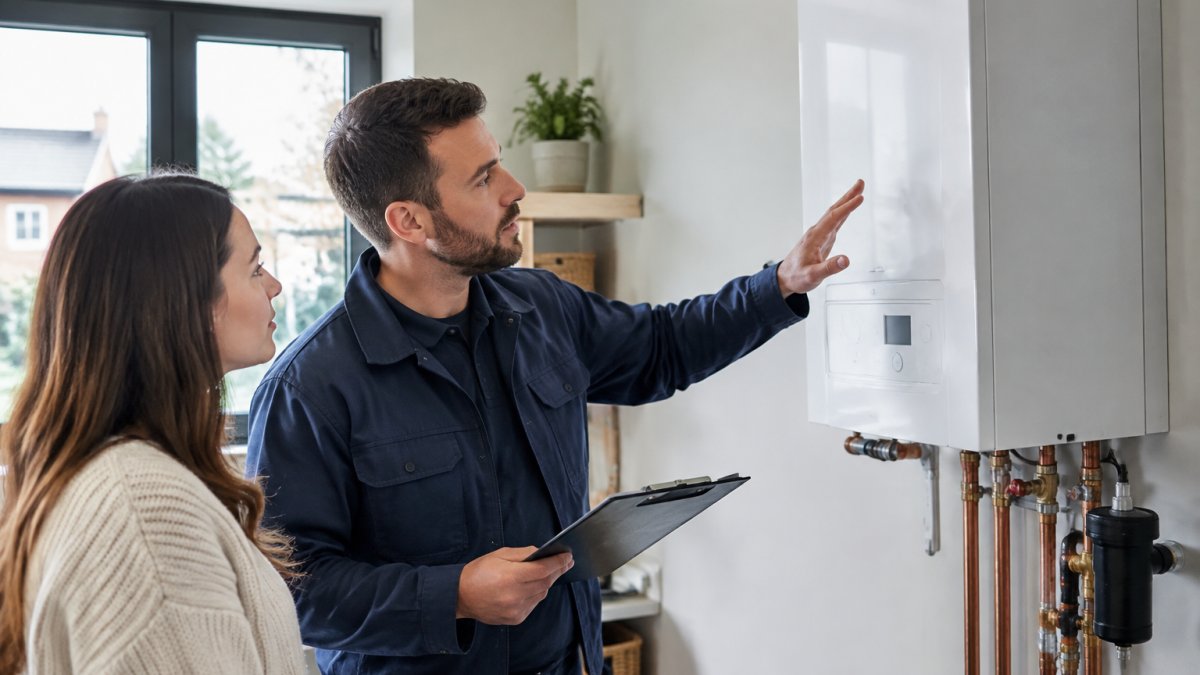
To choose new boiler for your home, first confirm your fuel options and whether you have mains gas. Then match the boiler type to your household and get a room-by-room heat-loss assessment to size it. Compare the ten-year whole-life cost rather than the sticker price.
- Check whether you have mains gas before comparing any models.
- A combi suits smaller homes, while a system boiler suits several bathrooms.
- Oversized boilers short cycle, wasting energy and wearing components.
- Ask for a room-by-room heat-loss assessment and written sizing calculation.
- Compare the ten-year total cost, including servicing, repairs and running costs.
Table of Contents
- Why Choosing the Right Boiler Matters Before You Get Quotes
- Step 1: Check Your Fuel Options and Whether You Have Mains Gas
- Step 2: Compare Combi Boiler vs System Boiler vs Regular Boiler
- Step 3: Work Out What Size Boiler You Need
- Step 4: Look at Whole-Life Cost, Running Costs and Future-Proofing
- Step 5: Use a Boiler Replacement Checklist Before You Buy
- Booking Your Boiler Survey and Installation Quote With Castle Rock
- Frequently Asked Questions
Why Choosing the Right Boiler Matters Before You Get Quotes
Deciding to choose a new boiler for your home is one of the bigger heating decisions you will make, and it is easy to rush. A boiler usually lasts 10 to 15 years, so a poor choice can mean higher bills and a system that never quite heats the house properly. Getting the basics right before you ask for quotes puts you in a far stronger position.
Many homeowners start by comparing prices, but the cheapest quote is not always the best value. A boiler that is too large wastes fuel through short cycling, while one that is too small struggles on cold mornings. This guide walks through the key steps to help you decide what suits your property.
Last Updated: November 12, 2026
Step 1: Check Your Fuel Options and Whether You Have Mains Gas
The first question is what fuel your home can realistically use. Mains gas is the most common option in Edinburgh and the Lothians, and it is usually the cheapest to run per unit of heat. If you have no mains gas connection, your choice narrows to alternatives such as oil, liquefied petroleum gas or electric heating.
Check with your current supplier or the meter and pipework in your property before you start comparing models. Many homeowners assume they have gas when they do not, and that discovery can change the whole project. Ask the installer to confirm the supply before agreeing a specification.
Step 2: Compare Combi Boiler vs System Boiler vs Regular Boiler
Most UK homes choose between three main boiler types. Each suits a different household.
- Combi boiler: Heats water on demand and needs no hot water cylinder. It suits smaller homes and flats with one or two bathrooms.
- System boiler: Works with a separate hot water cylinder and a sealed heating system. It suits homes with several bathrooms and steady hot water demand.
- Regular (heat-only) boiler: Needs a cold water storage tank and a hot water cylinder. It suits larger homes with an existing tank and cylinder.
A common mistake is choosing a combi for a large family home. If you are weighing alternatives to a gas boiler, you can explore air source heat pump options for Edinburgh homes. The boiler can struggle to supply two showers at once, and that frustrates everyone. Count your bathrooms and typical peak use before you decide. A system boiler is often a better fit where two or more bathrooms are in regular use.
The three main boiler types each suit a different household, as summarised below.
| Boiler type | Best for | Key difference |
|---|---|---|
| Combi boiler | Smaller homes and flats with one or two bathrooms | Heats water on demand, no hot water cylinder needed |
| System boiler | Homes with several bathrooms and steady hot water demand | Works with a separate hot water cylinder and sealed heating system |
| Regular (heat-only) boiler | Larger homes with an existing tank and cylinder | Needs a cold water storage tank and a hot water cylinder |
Step 3: Work Out What Size Boiler You Need
Boiler output is measured in kilowatts (kW), and getting it right matters more than most homeowners expect. An oversized boiler cycles on and off, known as short cycling, which wastes energy and wears components. An undersized one cannot keep the house warm on the coldest days. The right size depends on heat loss, property size, insulation, radiator output and hot-water demand, not on a simple bedroom count.
For a combi boiler, sizing is driven mainly by hot-water demand. A properly sized combi must also deliver a usable flow rate, so the right output depends on the property and the water supply rather than a fixed range. A combi must also deliver a usable flow rate: if the incoming mains flow is poor, a larger combi will not fix a weak shower, and a stored-hot-water system may be the better answer.
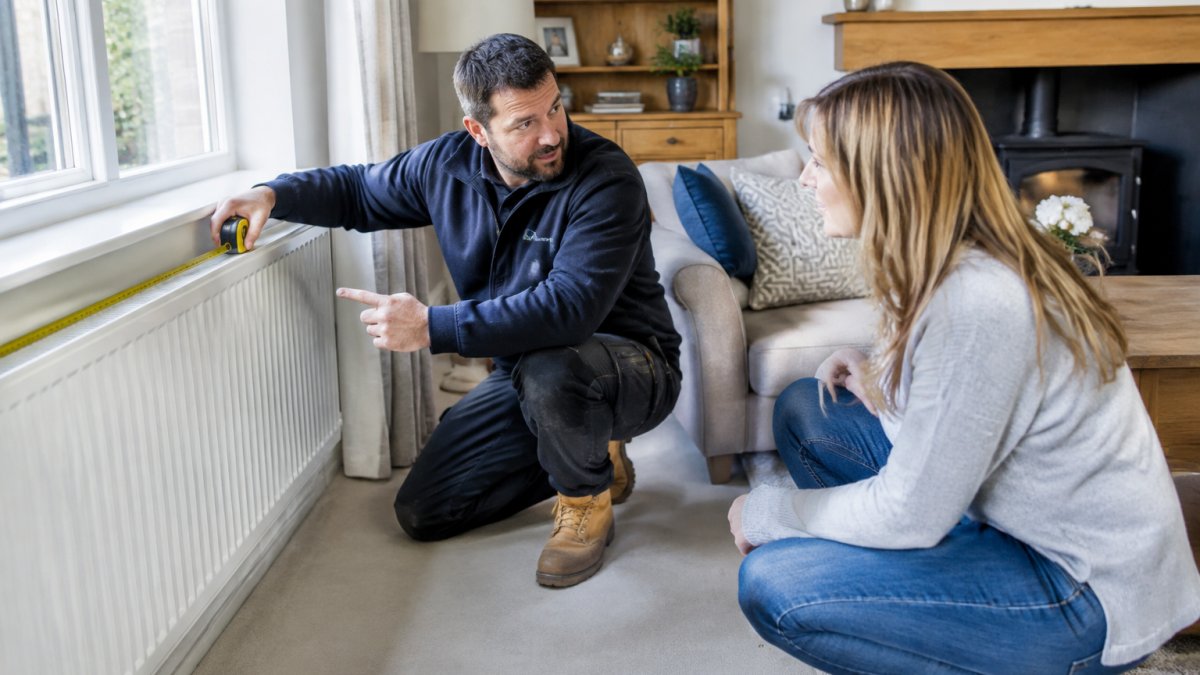
For system and regular boilers, the heating load usually drives the size, with the hot-water cylinder sized separately. A poorly insulated or extended property can need considerably more heating output than a well-insulated one. A heat-loss assessment is the only reliable way to confirm this. It measures insulation, glazing, draughts, wall construction and radiator output room by room, rather than guessing from floor area.
Watch out: online calculators and bedroom rules of thumb are only rough guides, so treat any calculator result as a conversation starter with your installer, not a specification.
Ask for a room-by-room heat-loss assessment and a written sizing calculation before you compare models. If an installer quotes a size without measuring the property or asking about hot-water use, ask them to explain their reasoning. A properly sized boiler with matched controls will run more efficiently and last longer than one chosen by habit.
Step 4: Look at Whole-Life Cost, Running Costs and Future-Proofing
The purchase price is only the first number in a much longer sum. A boiler decision is really a whole-life cost decision, and comparing quotes on sticker price alone is how homeowners end up paying more over ten to fifteen years. A useful way to compare is to add up five things: purchase, installation, annual servicing, likely repairs, and running cost.
Purchase and installation vary with boiler type, output and whether the system needs a flush, filter, new flue or controls. Annual servicing is a recurring cost, and manufacturers often require it to keep a warranty valid. Repairs are unpredictable, but a common pattern is that cheaper components and poor installation quality lead to more call-outs in years five to ten. Running cost depends on efficiency, fuel price and how the system is controlled, a high-efficiency boiler with poor controls can cost more to run than a mid-efficiency boiler with good ones.
A transparent way to compare two options is to write down, for each: the installed price, the assumed annual servicing cost, the assumed annual running cost, and the expected lifespan. Then compare the ten-year total rather than the first invoice. Ask each installer for their efficiency figure and their assumptions about your hot-water use, because a combi and a system boiler with a cylinder can have very different running profiles in the same house.
Future-proofing deserves equal weight. Government policy is moving towards lower-carbon heating, and a boiler fitted today may not be the last heating decision you make in this home. Compare the boiler against a heat pump and a hybrid system on practical suitability, not just headline efficiency. A heat pump usually needs good insulation, larger radiators or underfloor heating, and a suitable outdoor unit position; a hybrid system can suit homes where a full heat pump retrofit is impractical. Ask your installer whether the cylinder, controls and radiators specified now would be compatible with a future heat pump, because that can reduce the cost of switching later.
Watch out: a quote that looks cheap upfront can cost more over its life if it leaves out items such as a system flush, a magnetic filter or a longer warranty. Compare like-for-like scopes, not just the boiler model.
Step 5: Use a Boiler Replacement Checklist Before You Buy
Before you sign anything, check the basics. When you choose a new boiler, ask each installer to confirm the following:
- Gas Safe registration for the engineer doing the work
- A written, itemised quote covering labour, parts and VAT
- Boiler model, output and efficiency rating
- Warranty length and what it covers
- What happens to the old boiler and system flush
- Expected timescale and disruption
If an installer cannot answer these clearly, that is a warning sign. Agreeing the scope in writing before any work starts is good practice. To check what a service should cover when comparing what you are offered, see what's included in a boiler service.
Booking Your Boiler Survey and Installation Quote With Castle Rock
If you are ready to take the next step, a survey will confirm the right boiler size and type for your home. Castle Rock Plumbing, Heating and Renewables serves Edinburgh and the Lothians, and our Gas Safe registered engineers explain the options before any work begins. You can book a boiler survey and installation quote to get started. To compare fitted estimates that include labour and VAT, you can also get a boiler quote.
Ready to choose the right boiler? Castle Rock Plumbing heating and renewables offers survey-led advice, clear scope and Gas Safe registered installation across Edinburgh and the Lothians. Request a survey and get a quote that matches your home.
Frequently Asked Questions
How do I know what size boiler I need for my home?
Boiler size is usually expressed in kilowatts (kW) and depends on your heat loss and hot-water demand, not just the number of bedrooms. A qualified engineer can carry out a heat-loss assessment that accounts for insulation, draught-proofing, window type and the number of radiators. Oversized boilers short-cycle and waste energy, while undersized boilers struggle to heat the home on cold days. Ask the installer to show the calculation behind their recommendation before you agree to the quote.
Is a combi boiler better than a system boiler?
A combi boiler suits smaller homes with one or two bathrooms and moderate hot-water use, because it heats water on demand and needs no hot-water cylinder. A system boiler works better in larger homes with several bathrooms, as it pairs with a cylinder that stores hot water for simultaneous use. Neither is better in every case. The right choice depends on your household, water pressure, space and how you use hot water day to day.
Can I get a new boiler if my home does not have a mains gas supply?
Yes. Options include oil-fired boilers, LPG (bottled gas) boilers, air-source heat pumps and, in some cases, electric boilers. Each has different installation requirements, running costs and fuel-supply considerations, so the right choice depends on your property and access. A heating engineer can assess whether your home is suitable for each option and explain the likely running costs before you commit.
How long should a new boiler last?
A well-maintained modern boiler typically lasts around 10 to 15 years, though lifespan depends on the make, installation quality and how well it is serviced. Annual servicing helps protect the warranty and catches small faults early. Ask the installer what warranty is included and what servicing the manufacturer requires to keep it valid.
