Quick Summary
For a leaking pipe in Edinburgh, a qualified plumber should attend as soon as possible if water is spreading or threatens damage, while you isolate the supply at the stopcock. Edinburgh plumbing help is needed urgently for burst pipes, gas smells, complete boiler failure in winter, or sewage backups, and gas smells need the National Gas Emergency Service on 0800 111 999.
- Turn off the stopcock first, then open the lowest tap to drain remaining pressure.
- If you smell gas, leave the property and call 0800 111 999 from outside.
- Ask for a written, itemised quote covering call-out, labour, parts and VAT.
- Check the engineer is Gas Safe registered and confirm it on the Gas Safe Register.
- Ask whether the call-out charge is credited if you go ahead with the repair.
Table of Contents
- Edinburgh Plumbing: What Counts as an Emergency
- Practical Checks Before You Call a Plumber
- Leaking Pipe Repair Edinburgh: What Happens on a Call-Out
- Emergency Plumber Edinburgh: Response Times and Availability
- Plumber Call-Out Charges: What You Should Be Quoted
- How to Find a Reliable Plumber in Edinburgh
- Booking Castle Rock Plumbing for Your Next Job
- Frequently Asked Questions
Edinburgh Plumbing: What Counts as an Emergency
A plumbing emergency is any fault that threatens water damage, loss of heating, or a risk to health and safety, and that cannot safely wait until the next working day. Knowing this helps anyone searching for Edinburgh plumbing help act quickly. In Edinburgh, that usually means a burst or leaking pipe that is spreading water through a ceiling, a gas smell, a boiler that has stopped completely in winter, or a sewage backup.
Not every problem is urgent, though. A dripping tap or a slow-draining sink can usually be booked in for a routine visit. Knowing the difference saves money and makes sure urgent calls get priority.
Watch out: if you smell gas, leave the property, do not switch lights or electrical devices on or off, and call the National Gas Emergency Service on 0800 111 999 before anything else.
Practical Checks Before You Call a Plumber
A few minutes of safe, sensible checks can limit water damage and give the plumber a clearer picture before they arrive. Work through these in order, and stop at any point where you feel unsure or where the situation looks unsafe.
1. Make the situation safe first. If water is near sockets, light fittings or a consumer unit, do not touch anything electrical. Switch off the relevant circuit at the consumer unit only if you can reach it without crossing water.
2. Find and turn off the stopcock. Most homes have an internal main stopcock under the kitchen sink, in a utility cupboard or near the point where the supply enters the property. Turn it clockwise until it stops.
3. Drain the remaining pressure. Once the supply is off, open the lowest cold tap in the property, usually a downstairs sink or an outside tap, to release water left in the pipes. This reduces the amount that can escape from the leak. Flushing a toilet once also helps draw water through.
4. Check the boiler pressure and fault display. On a combi boiler, the pressure gauge normally sits in the green band, often between 1 and 1.5 bar when cold. A reading well below that can explain a loss of heating or hot water.
5. Look for the source without dismantling anything. Stains on ceilings, damp patches on walls, water pooling under a sink or a dripping joint behind a washing machine all help narrow down the fault. Take a photo on your phone.
6. Note what you have already tried. Tell the plumber when the problem started, whether it is constant or intermittent, what you have turned off, and any fault codes or noises you have noticed. This shortens diagnosis and can reduce the time you are charged for.
Watch out: if you smell gas, do not touch electrical switches, do not use a mobile phone inside the property, and leave immediately. Call the National Gas Emergency Service on 0800 111 999 from outside.
These steps do not replace a qualified engineer. They simply mean you can describe the fault accurately, stop water escaping while you wait, and avoid making a manageable leak worse.
Leaking Pipe Repair Edinburgh: What Happens on a Call-Out
A typical call-out begins with a conversation about where the water is coming from and how far it has spread. The plumber then inspects the affected pipework, usually under sinks, behind panels or in the loft, and explains what needs replacing.
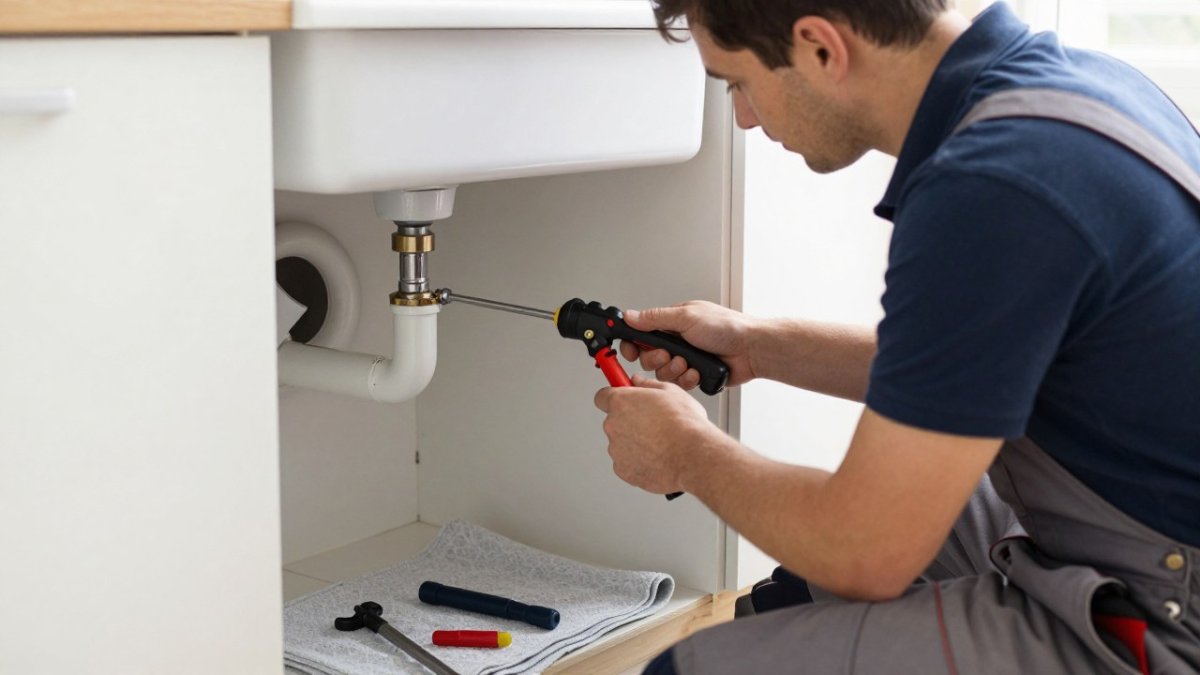
Many leaks come from worn compression joints, corroded copper pipes or failed washers on taps.
Isolating the Water Supply Safely
Turn off the stopcock first, then open the lowest tap in the property to drain remaining pressure. If the leak is on a single appliance, such as a washing machine, isolating its own valve may be enough. Keep towels and a bucket nearby, and switch off any electrical sockets close to the water.
Emergency Plumber Edinburgh: Response Times and Availability
Response times depend on the time of day, the season and how many jobs are already booked. To confirm we cover your area, see our service coverage across Edinburgh and the Lothians. Emergency work often means same-day or out-of-hours attendance, while routine repairs may be scheduled for the following days.
When comparing providers, ask directly whether they cover your postcode and whether an out-of-hours call-out is available. Confirm this before you need it, not during a crisis.
Plumber Call-Out Charges: What You Should Be Quoted
Pricing for plumbing work varies, and no article can give a single figure that fits every job. What it can do is explain how charges are built up, so you can read a quote properly and ask the right questions before work begins. The aim is not to find the cheapest headline number, but to understand what is included and what could change the final bill.
How a typical quote is structured. Plumbers often separate the charge into a few components. Ask for each of these to be shown, either on the quote or in writing before the visit:
- Call-out or visit charge. A fixed amount for attending, which may or may not be credited against the cost of the repair if you go ahead. Ask whether it is waived if no work is carried out.
- Labour. Either an hourly rate or a fixed price for a defined job. Fixed prices are easier to compare, but check exactly what the job covers.
- Parts and materials. Should be itemised or at least described, with a note on whether they are charged at cost plus a markup or at a retail price.
- VAT. Ask whether any VAT is included in the figure, and whether the quoted amount is inclusive or exclusive of it, because the difference matters.
- Out-of-hours or emergency surcharge. Evenings, weekends and bank holidays often carry a premium. Ask what the uplift is before you agree to an emergency visit.
What pushes a bill up. Access is a common factor. A leaking joint under a sink is quick to reach; the same leak behind tiling, under a solid floor or in a tenement flat with shared access takes longer and may need making good afterwards. Older properties with lead, galvanised or mixed pipework can also take longer to diagnose and repair than modern installations. Parts availability matters too: a standard washer or compression fitting is inexpensive, while a specific boiler component may need ordering.
Questions to ask before work starts. A clear provider will welcome these:
- Is the call-out charge separate from the repair, and is it credited if I proceed?
- Is the quote fixed or an estimate, and what would make it change?
- Are parts included, and are they charged at cost or retail?
- Is VAT included in the figure you have given me?
- Is there an out-of-hours surcharge, and how much is it?
- Will I be told before any additional work is carried out?
Warning signs in a quote. Be cautious of a single lump sum with no breakdown, a price that rises sharply once the engineer is on site without explanation, or pressure to agree to additional work on the spot. A written quote that sets out scope, price and any conditions protects both sides. If a provider will not put a quote in writing, consider getting a second opinion.
Watch out: a very low call-out charge can be a headline figure that excludes labour, parts or VAT, so compare the total cost of the job rather than the attendance fee alone. Equally, a quote that is dramatically cheaper than others may indicate that the scope is narrower than you assume.
This article does not quote specific figures because the answer depends on the fault, the property and the time of day. What you can do is insist on a written, itemised quote and confirm the total before anyone picks up a tool.
The article breaks a typical plumbing quote into a few parts, which are worth checking before any work begins.
| Quote item | What to check | Why it matters |
|---|---|---|
| Call-out or visit charge | Whether it is credited if you proceed | Can be a separate cost |
| Labour | Hourly rate or fixed price | Fixed prices are easier to compare |
| Parts and materials | Itemised, at cost or retail | Affects the final bill |
| VAT | Whether the figure includes it | Changes the total |
| Out-of-hours surcharge | The uplift amount | Evenings, weekends, bank holidays |
How to Find a Reliable Plumber in Edinburgh
Start by checking that the engineer is registered with a recognised trade body and holds the relevant gas and plumbing qualifications. For any gas work, look for Gas Safe registration and ask to see the engineer's card, then confirm it on the Gas Safe Register website.
Read recent reviews on sites such as Google and FreeIndex, paying attention to comments about punctuality and whether the quote matched the final bill. Ask whether the work is covered by insurance and what happens if the repair needs revisiting.
Good plumbers explain options clearly and agree the scope before starting. If a tradesperson pressures you into immediate decisions without explaining the reasons, consider getting a second opinion.
Booking Castle Rock Plumbing for Your Next Job
At Castle Rock Plumbing heating and renewables, we are Gas Safe registered and work on plumbing, boilers and heating across Edinburgh and the Lothians. We aim to explain the fault, agree the scope with you before any work starts, and give you a clear quote.
To check availability for your leak or heating problem, get in touch with Castle Rock Plumbing heating and renewables through its website. You can also check boiler repairs in Edinburgh or get a boiler quote for planned work.
Frequently Asked Questions
How do I find a reliable plumber?
Start by checking that the engineer is Gas Safe registered for any gas work, since this is a legal requirement for gas appliances in the UK and you can verify registration on the Gas Safe Register website. For general plumbing, look for membership of a recognised trade body and proof of public liability insurance. Ask for a written quote before work starts, read recent reviews on Google and FreeIndex, and be wary of anyone who asks for full payment upfront or cannot give a clear description of the work. Castle Rock Plumbing heating and renewables provides Gas Safe registered engineers and will explain the scope before any work begins.
How much does a plumber charge for an emergency call-out?
Call-out charges vary with the time of day, the urgency and the complexity of the job, so there is no single fixed figure that applies to every Edinburgh plumber. Ask for the call-out fee, the hourly labour rate and any parts charges before the engineer attends, and request a written breakdown. Castle Rock Plumbing heating and renewables does not publish fixed prices in this article, so please contact the business directly for a current quote based on your property and the work needed.
Should I turn off the water if a pipe is leaking?
Yes, if the leak is significant or you cannot stop it quickly. Locate the stopcock, which is often under the kitchen sink or near where the mains enters the property, and turn it clockwise to shut off the supply. Then open a cold tap to relieve pressure. If the leak is from a hot water or heating pipe, switch off the immediate power to the boiler or immersion heater as a precaution. Keep a bucket and towels nearby and call a plumber once the water is off.
What should I ask a plumber before booking?
Ask whether the engineer is Gas Safe registered if gas is involved, whether they are fully insured, and what the call-out charge covers. Request a written or itemised quote, ask how long the job should take, and check what happens if the problem turns out to be more extensive. It is also worth asking about warranties on parts and workmanship and when the engineer can realistically attend, so you can plan around the visit.
