Last Updated: 5 November 2026
Quick Summary
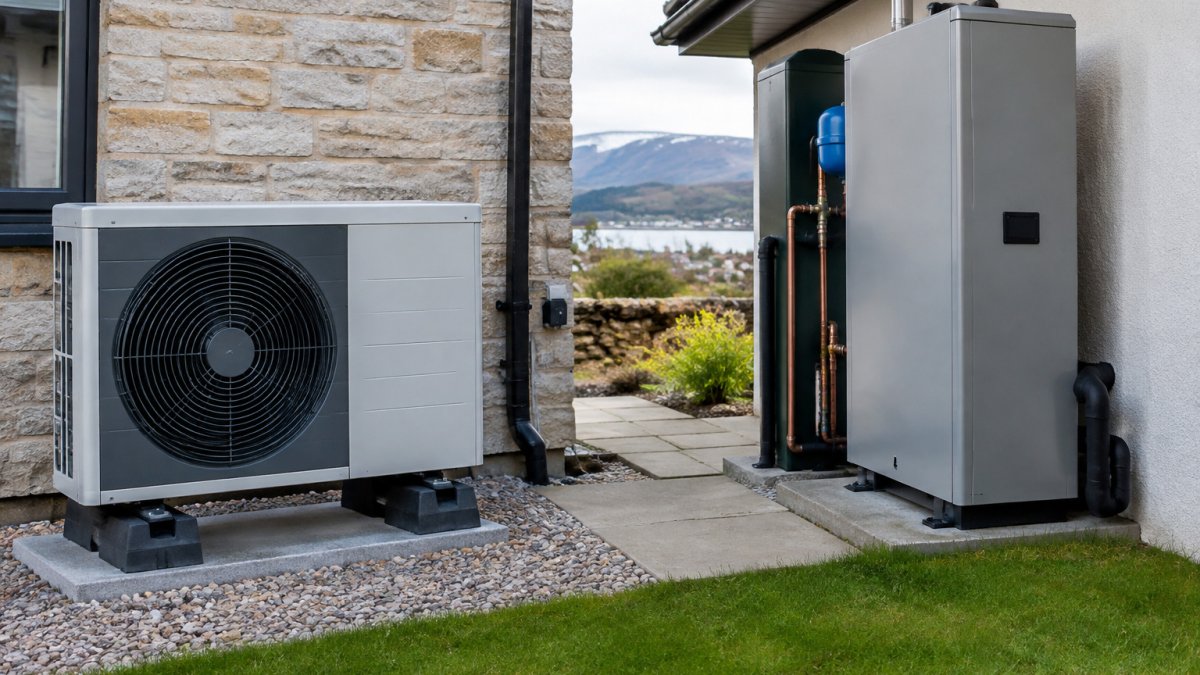
Heat pump installation in Scotland suits most homes when the right system is chosen for the property. Air source systems need the least groundwork and suit most typical Scottish homes, while ground source systems need a large garden area and more disruption. The choice depends on outdoor space, how well the house holds heat, and what existing radiators can cope with.
- Air source systems draw heat from outside air and need minimal groundwork.
- Ground source systems pull heat from the earth through buried loops.
- Ground source installation usually causes higher disruption, often lasting weeks.
- Ask for a heat loss calculation before committing, to avoid an underperforming system.
- Check current grant schemes, as eligibility and amounts can change over time.
Table of Contents
- Heat Pump Installation in Scotland: Which System Suits Your Home
- Side-by-Side Comparison of Air Source and Ground Source Heat Pumps
- Heat Pump Installation Cost in Scotland: What Each System Typically Involves
- Air Source Heat Pump Installation: Pros, Cons and Suitability for Older Properties
- Heat Pump Installation Time: From Survey to Commissioning
- Heat Pump Grants and Funding Available in Scotland
- Booking Your Heat Pump Survey With Castle Rock Plumbing
- Frequently Asked Questions
Heat Pump Installation in Scotland: Which System Suits Your Home
Heat pump installation in Scotland is no longer a niche choice. Air source and ground source systems are both realistic options for many Scottish homes, but they suit different properties, budgets and sites. Castle Rock Plumbing, Heating and Renewables, a Gas Safe registered business serving Edinburgh and the Lothians, works with homeowners weighing these options. The right choice starts with your home, not the brochure.
Air source systems draw heat from outside air and need the least groundwork. Ground source systems pull heat from the earth through buried loops, which needs space and a larger upfront outlay. Home Energy Scotland heat pump guidance
In practice, most decisions come down to three questions: how much outdoor space you have, how well the house holds heat, and what your existing radiators can cope with.
Side-by-Side Comparison of Air Source and Ground Source Heat Pumps
The two systems differ in installation, running requirements and disruption. The table below summarises the main differences.
| Factor | Air Source | Ground Source |
|---|---|---|
| Heat source | Outside air | Ground or water loops |
| Groundwork | Minimal | Trenches or boreholes |
| Outdoor space needed | Small external unit | Large garden area |
| Typical disruption | Low, usually days | Higher, often weeks |
| Best for | Most typical Scottish homes | Larger plots, new builds |
Air source units are usually the simpler retrofit. Ground source systems can run more steadily in cold weather, but they only make sense where the site allows.
Heat Pump Installation Cost in Scotland: What Each System Typically Involves
Costs vary widely, and we do not publish fixed prices for work we have not surveyed. Renewable Energy Hub heat pump cost guide reports indicative installed-cost ranges for both system types, but these are general figures rather than a quote for your property.
Air source installations generally involve the outdoor unit, a hot water cylinder or buffer, pipework, controls and commissioning. Ground source work adds the ground loop, which is the largest variable.
For a firm figure, the best route is a survey of your property. Price depends on the system size, the state of your existing pipework and the access on site.
Air Source Heat Pump Installation: Pros, Cons and Suitability for Older Properties
Air source systems are a common route for existing homes, including older stone-built properties. Their main advantage is the lower installation disruption. They also avoid the groundwork that ground source systems need.
The drawbacks are real. External units need outdoor space and proper placement to reduce noise. Performance depends on how well the house is insulated and how hot the radiators need to run. Older homes often run at higher flow temperatures, which can reduce efficiency. A heat loss calculation before installation shows whether your home is a good fit.
Heat Pump Installation Time: From Survey to Commissioning
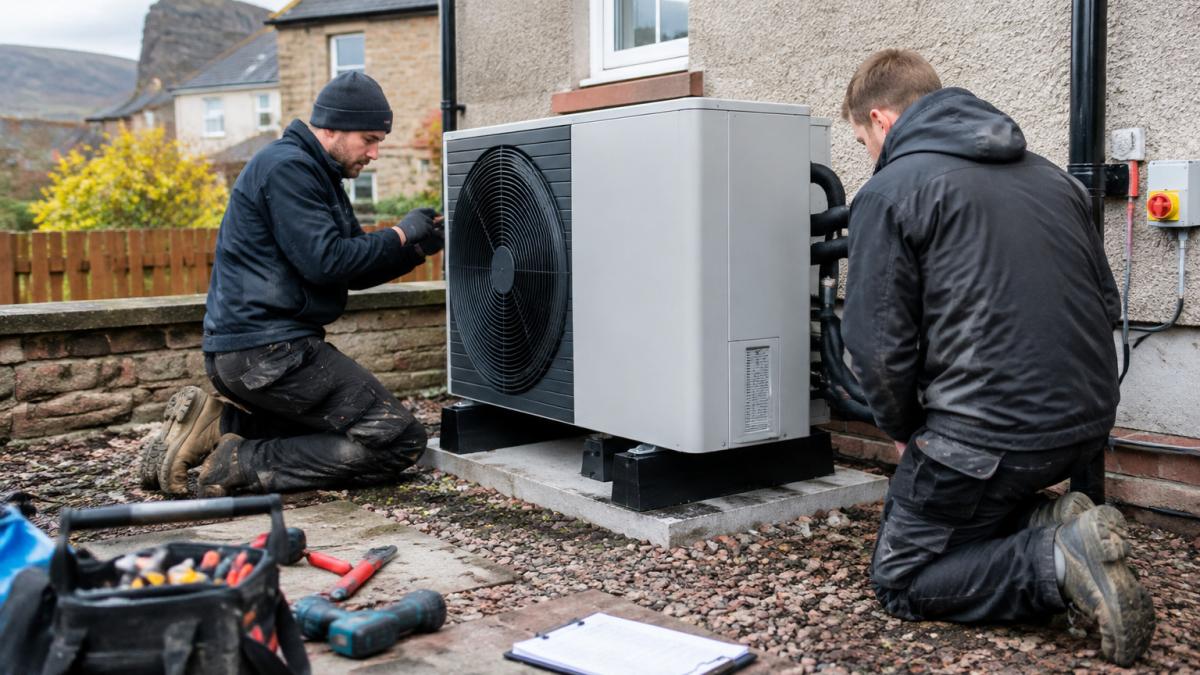
A typical air source project follows a clear sequence. First comes a site survey and heat loss assessment. Next, the design and any radiator or pipework changes are agreed. Commissioning and handover follow, with the system set up and explained to you.
Ground source projects take longer because of the external groundwork.
Watch out: sizing a system without a heat loss calculation can lead to a heat pump underperforming. Ask for the calculation before you commit.
Heat Pump Grants and Funding Available in Scotland
Support for heat pumps in Scotland changes over time, so check current schemes before you commit. Home Energy Scotland grant and loan information sets out what is available for eligible households, and the scheme details can change, so use the official source for current eligibility and amounts.
Eligibility often depends on your property, your household and the type of system. The final decision on any scheme rests with the scheme provider.
Booking Your Heat Pump Survey With Castle Rock Plumbing
A survey is the first step in a heat pump project. We look at your property, your existing heating and the space available, then explain the options in plain terms. You get a clear scope before any work starts.
We serve homes and businesses across Edinburgh and the Lothians. If you are weighing up air source against ground source, a survey will help you decide which fits your home. To get started, get a boiler quote. Our team is Gas Safe registered, and we will be clear about scope before any work begins.
Frequently Asked Questions
How much does heat pump installation cost?
Costs vary with system type, property size, existing heating and the work needed. These are not personalised quotes, so ask for a written survey-based quote that itemises the equipment, labour, pipework and any radiator changes before you agree to anything.
How long does it take to install a heat pump?
Installation timelines depend on the system and the property. Ground source work involving ground loop excavation or boreholes takes longer than air source installation. Planning the survey, any radiator upgrades and commissioning into the schedule gives a more realistic overall picture than the on-site days alone.
Can I get financial support for a heat pump installation in Scotland?
Support available in Scotland can change, so check current schemes before you commit. Grant eligibility can depend on factors such as property type and existing heating, so check the eligibility requirements with the official scheme before booking work.
