Table of Contents
- Victorian Tenement Plumbing Problems: What You're Actually Dealing With
- Old Pipe Repair: When to Patch and When to Replace
- Shared Plumbing Responsibility in a Tenement: Who Pays for What
- Emergency Plumber for Tenement Leaks: When to Call and What to Expect
- DIY Repairs You Can Safely Tackle (And What to Leave Alone)
- Preventing Future Problems in Victorian Tenement Plumbing
- Frequently Asked Questions
Last Updated: 14 October 2026
Victorian Tenement Plumbing Problems: What You're Actually Dealing With
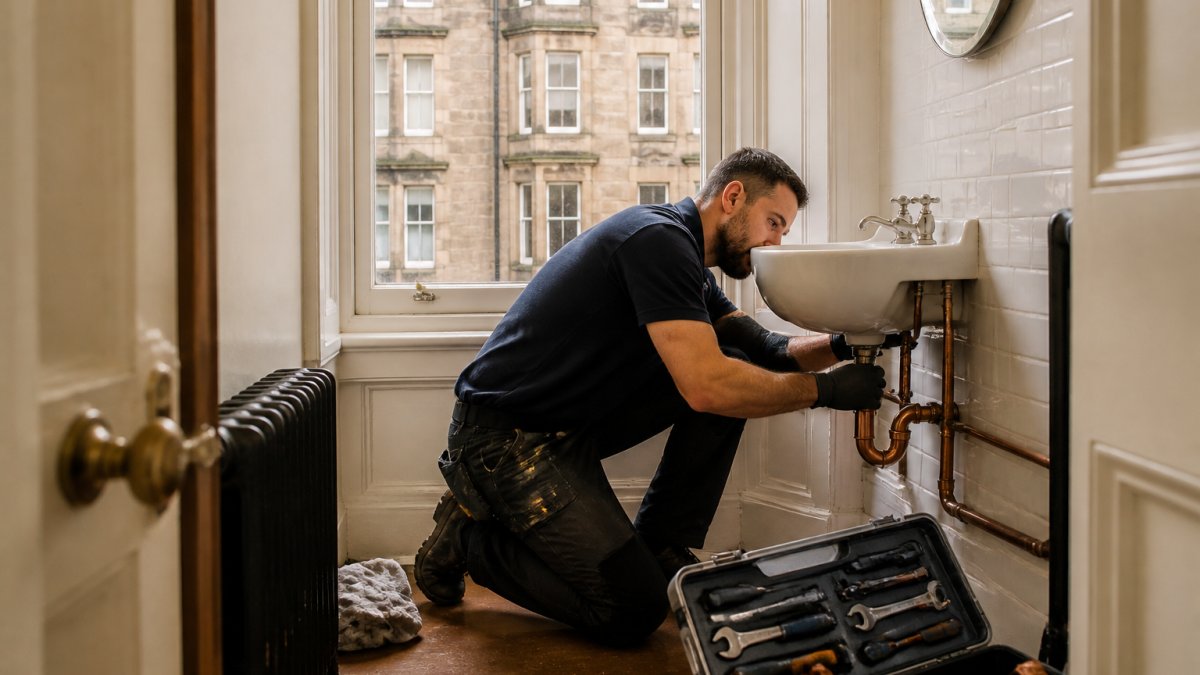
Plumbing repairs for Victorian tenements start with one hard truth: the pipes in these Victorian tenements were never designed for modern life. When a tenement was built, a single cold tap and a shared outside toilet were normal. Now every flat runs hot water, washing machines, dishwashers and central heating through pipework that predates the telephone.
The problems fall into a few predictable groups:
- Lead supply pipes that feed water into the flat
- Cast iron waste pipes that crack and corrode with age
- Shared rising mains serving several flats at once
- Poor water pressure on upper floors
- Leaks that travel through ceilings before anyone notices
According to Historic Environment Scotland's guidance on traditional buildings, older properties need materials and methods suited to their construction, not modern shortcuts.
That matters because a repair that works in a new-build can fail fast in a tenement.
Old Pipe Repair: When to Patch and When to Replace
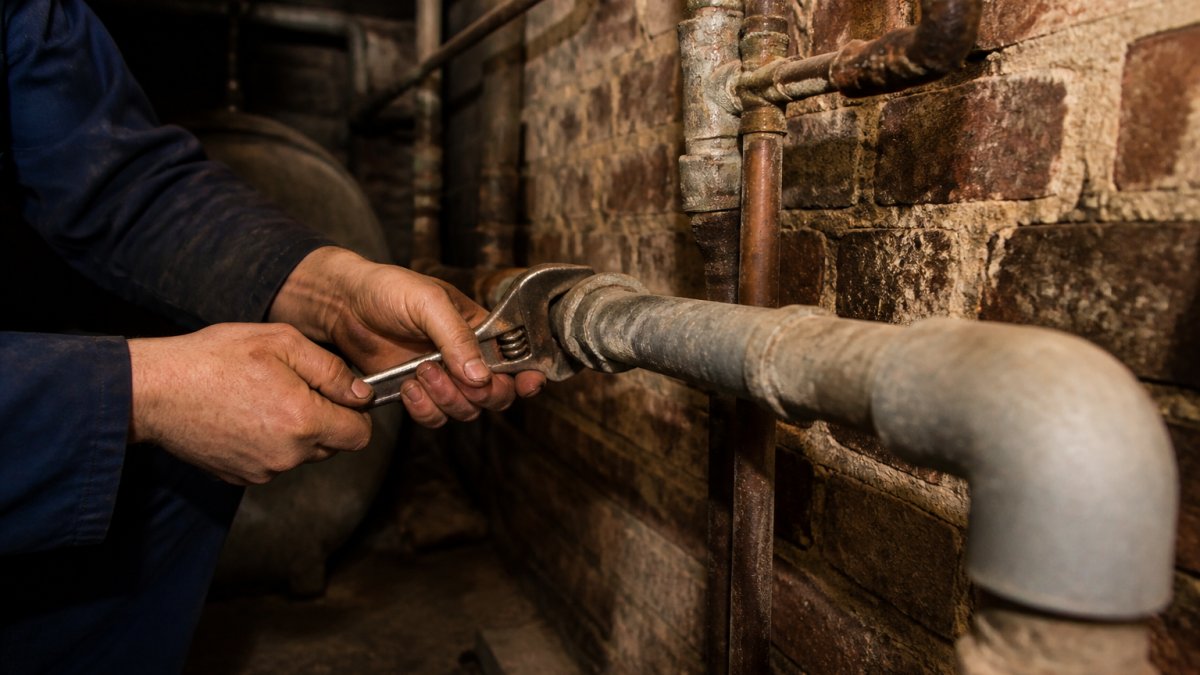
Patch a pipe when the damage is isolated and the surrounding metal is sound. Replace it when corrosion, repeated leaks or crumbling joints show the pipe is at the end of its life. A patch is a short-term fix; replacement solves the cause.
Here's how to tell the difference:
| Sign | Patch It | Replace It |
|---|---|---|
| Single small leak | Yes | No |
| Repeated leaks, same pipe | No | Yes |
| Green or white crust on pipe | No | Yes |
| Soft or flaking metal | No | Yes |
| Joints weeping in several spots | No | Yes |
A common mistake is patching a pipe that has already failed three times. The fourth leak is coming. Replacing the run once usually costs less than four emergency call-outs.
Lead Pipes: Identification and Replacement
Lead pipes are dull grey, soft enough to scratch with a coin, and often bend easily. If your supply pipe matches that description, it likely contains lead. The Drinking Water Inspectorate advises replacing lead supply pipes because no safe level of lead in drinking water has been established.
Replacement means running a new pipe from the boundary to the flat, usually in plastic or copper. This is a job for a qualified plumber, not a DIY task.
Shared Plumbing Responsibility in a Tenement: Who Pays for What
Shared plumbing responsibility in a tenement usually splits between the flat owner and the common repair fund. Pipes that serve only your flat are yours to fix. Pipes that serve several flats, or the building's main stack, are normally shared.
The general rule:
- Inside your flat, serving only you: your cost
- The main rising main or stack: shared between affected owners
- Roof, gutters and external pipes: usually common repairs
The Scottish Government's guidance on tenement maintenance sets out how owners share repair costs. Check your title deeds or factor's rules, because they can vary.
Emergency Plumber for Tenement Leaks: When to Call and What to Expect
Call an emergency plumber for tenement leaks when water is escaping fast, when it threatens a neighbour's ceiling, or when you cannot shut off the supply. For a slow drip into a bucket, a next-day visit is fine. For water running down a wall, call now.
When you ring, have this ready:
- Your address and flat number
- Where the water is coming from
- Whether you can reach the stopcock
- Whether a neighbour is affected
A good emergency plumber will ask about access and shut-off first, then give you a clear idea of what happens next. Expect them to isolate the leak, make it safe, and explain the full repair before starting it.
DIY Repairs You Can Safely Tackle (And What to Leave Alone)
Some jobs are safe for a careful owner. Others are not, and getting them wrong causes damage or danger.
Safe to try:
- Replacing a washer on a dripping tap
- Clearing a slow drain with a plunger
- Insulating exposed pipes to stop freezing
- Tightening a loose tap head
Leave to a professional:
- Anything involving lead pipework
- Gas appliances and boiler repairs
- Work on shared or hidden pipes
- Sealing a leak under pressure
Gas work is the clearest line. Only a Gas Safe registered engineer can legally work on gas appliances, and you can check an engineer's registration before booking anyone.
Preventing Future Problems in Victorian Tenement Plumbing
Prevention comes down to three habits: watch, insulate and service.
- Check under sinks monthly for damp or staining
- Lag exposed pipes in cold spots before winter
- Get the boiler serviced yearly by a Gas Safe engineer
- Fix small drips before they become leaks
- Know where your stopcock is and test it twice a year
Old pipework rarely fails without warning. The signs are there if you look.
A tenement leak never stays small for long, and shared pipework means one flat's problem quickly becomes the whole stair's. At Castle Rock Plumbing heating and renewables, our Gas Safe registered engineers handle everything from lead pipe replacement to emergency leaks, with clear communication about scope before any work begins. We work across homes, rentals and commercial premises, so landlords and property managers get the same reliable service. Get a boiler quote or book a repair.
Frequently Asked Questions
What plumbing problems are common in Victorian tenements?
Victorian tenements commonly suffer from corroded lead pipes, shared drainage runs that block easily, and low water pressure due to narrow bore pipes. Original cast iron waste pipes may leak at joints, and the shared stack serving multiple flats can cause persistent damp. These issues are often worsened by decades of patch repairs rather than full replacement.
Who is responsible for plumbing repairs in a tenement flat?
Responsibility depends on what the pipe serves. Pipes solely inside your flat are usually your responsibility. Shared pipes, such as the main stack or communal supply, are typically the joint responsibility of all affected owners. Your title deeds or the Tenement Management Scheme (Scotland) will set out exact obligations. Always check your deeds before agreeing to pay.
Can Victorian plumbing be repaired without replacing all the pipes?
Yes, in many cases. If the pipework is lead but still structurally sound, it may be possible to repair sections. However, if lead pipes are corroded or leaking at multiple points, full replacement is often the safer long-term option. A Gas Safe registered plumber can assess the condition and advise on the most cost-effective approach.
What should I do if a pipe bursts in a tenement flat?
Turn off the water at the stopcock immediately, then open all cold taps to drain the system. If the leak affects a shared pipe, alert your neighbours and the factor. Call an emergency plumber for tenement leaks right away, and document the damage for insurance. Do not attempt to repair a burst pipe yourself if it involves shared pipework.