
Last Updated: October 28, 2026
Quick Summary
The best heating system for tenements is one sized for the actual heat loss of the flat, not one copied from a modern house. Gas central heating suits flats with an existing gas supply and flue route, while heat pumps need larger radiators and good insulation, and electric heating suits flats with no gas supply.
- Solid stone walls and single-glazed sash windows make tenement flats lose heat quickly.
- A combi boiler removes the need for a tank where storage space is tight.
- Heat pumps run most efficiently at lower flow temperatures, so a heat loss calculation is essential.
- Electricity costs more per unit than gas, so insulation and off-peak tariffs matter most.
- Ask any engineer for their Gas Safe card and a written scope before booking.
Table of Contents
- Why Tenement Heating Is Different from a Standard House
- The Main Heating System Options for Tenement Flats Compared
- What Drives the Cost of Installing Gas Central Heating in a Flat
- Energy Efficiency Grants for Tenement Owners
- Installation and Maintenance: What Tenement Work Actually Involves
- How to Find a Central Heating Engineer Near Me Who Understands Tenements
- Common Mistakes Tenement Owners Make When Upgrading Heating
- Get a Boiler Quote for Your Tenement Flat
- Frequently Asked Questions
Why Tenement Heating Is Different from a Standard House
Choosing the best heating system for tenements starts with one fact: a tenement flat is not a small house. It shares walls, floors, a roof and often a chimney stack with neighbours, and that changes almost every decision. The constraints can include solid stone walls, single-glazed sash windows, limited space and shared services.
Heat loss is the first issue. Solid walls and original windows shed warmth quickly, so a system sized for a modern semi-detached house will underperform badly here. The second issue is access. Pipework often has to follow existing routes, and communal areas need agreement before anything is altered. The third is that any change affects the whole building's fabric, not just one flat.
That combination is why flat-by-flat guesswork fails. The best heating system for tenements is the one sized for the actual heat loss of the flat.
The Main Heating System Options for Tenement Flats Compared
Three system types dominate tenement upgrades, and each suits a different set of circumstances. The table below summarises how they compare on the factors that matter most in a shared old building.
| System | Best for | Installation disruption | Running cost profile | Key constraint |
|---|---|---|---|---|
| Gas central heating | Flats with an existing gas supply and flue route | Moderate: pipework and radiator changes | Generally lower per unit of heat | Flue position and ventilation rules |
| Heat pump | Well-insulated flats with larger radiators | Higher: emitter and cylinder changes | Lower when flow temperature is kept low | Heat loss and radiator sizing |
| Electric and storage heating | Flats with no gas supply or limited pipe routes | Low: no gas pipework needed | Higher per unit, off-peak tariffs help | Insulation and tariff choice |
Gas Central Heating
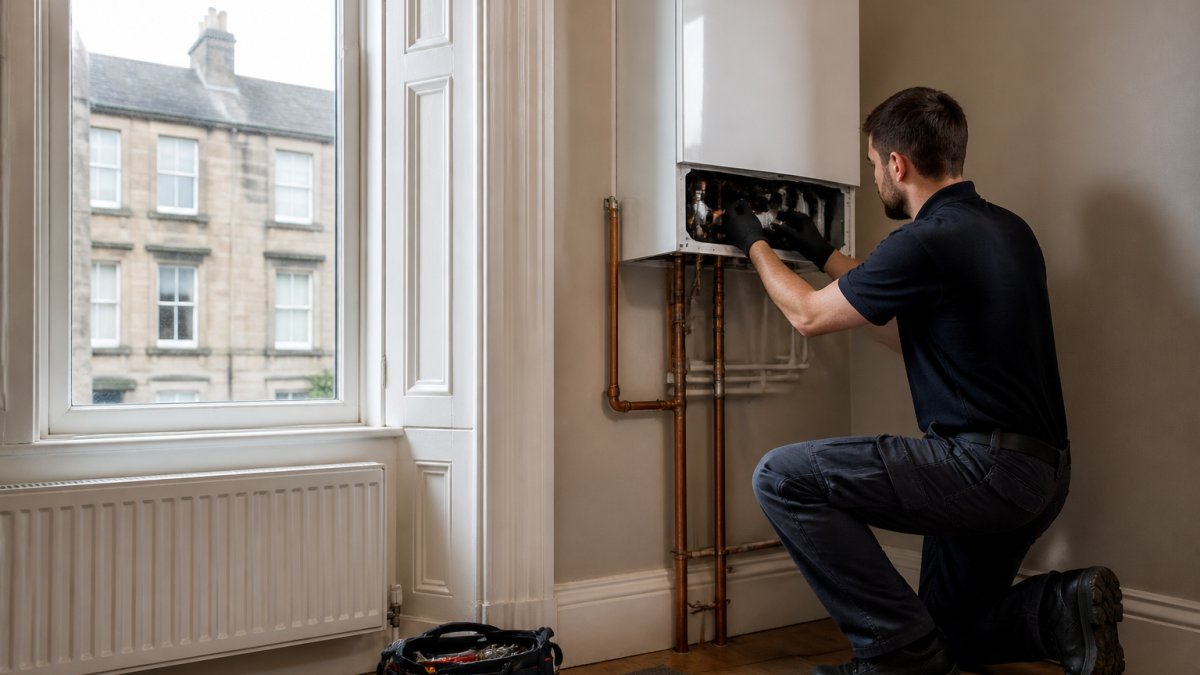
Gas central heating remains the most common choice in tenement flats because the infrastructure is usually already there. A combi boiler removes the need for a tank, which matters when storage space is tight. The catch is the flue. It must terminate where products of combustion can disperse safely, away from windows and openings, and that rule decides whether a like-for-like swap is straightforward or needs a different boiler position.
Heat Pumps in Older Buildings
Heat pumps work in older buildings, but only when the whole system is designed around them. They run most efficiently at lower flow temperatures, which means larger radiators and better insulation. A heat loss calculation is not optional here; it is the design document. For a realistic look at how this plays out in less insulated properties, our guide to heat pump efficiency in older homes explains the flow temperature and radiator sizing trade-offs in detail.
Electric and Storage Heating
Electric heating suits flats with no gas supply or where running new pipework is impractical. Storage heaters charge on off-peak tariffs and release heat through the day. The honest limitation is running cost: electricity costs more per unit than gas, so insulation and tariff selection do most of the heavy lifting. For a small, well-sealed flat, it can be a sensible answer. For a draughty one, it rarely is.
What Drives the Cost of Installing Gas Central Heating in a Flat
The cost of installing gas central heating in a flat is driven by access and complexity, not by the boiler alone. A straightforward swap in a flat with an existing system and a compliant flue position sits at one end of the range. A full first-time installation with new pipework, radiator positions and a flue route through a stone wall sits at the other.
The main cost drivers are:
- Boiler type and position, including whether the flue route is viable
- Pipework runs, which are longer and more awkward in solid-walled flats
- Radiator count and sizing, especially if larger emitters are needed
- Making good, such as plasterwork and decoration after pipe runs
- Communal permissions, where work touches shared areas
Two flats on the same street can differ substantially. For real Edinburgh price guidance to sanity-check what a gas central heating installation should cost, see our cost of boiler installation in Edinburgh price guide.
Energy Efficiency Grants for Tenement Owners
Support for energy efficiency work exists, but eligibility and amounts change, and tenement flats bring extra complications around communal consent. Rather than quote figures that may be out of date, check the current schemes directly through GOV.UK's energy grants and schemes guidance and Home Energy Scotland's funding advice.
Landlords should also note that rented property has its own minimum energy efficiency rules, so check the current requirements before committing to a specification.
Installation and Maintenance: What Tenement Work Actually Involves
A tenement installation is a logistics job as much as a plumbing one. Pipework routes, radiator positions and boiler location all need consideration.
Maintenance follows the same logic. For landlords, a Gas Safe Register landlord gas safety check guide explains the annual CP12 obligation on rented property.
How to Find a Central Heating Engineer Near Me Who Understands Tenements
Searching for a central heating engineer near me returns plenty of names. Our guide to finding a central heating engineer near me sets out how to find and vet a reliable local engineer. The filter that matters is tenement experience. Ask three questions before booking anyone:
- Are you Gas Safe registered, and can I see the card? Every engineer carrying out gas work must be on the register, and you can verify the number yourself through the Gas Safe Register verification service.
- Have you worked in this type of building before? Solid walls, shared stacks and flue routes are where inexperience shows.
- Will you put the scope in writing? A clear written scope, agreed before work starts, is what separates a professional job from a running argument.
Common Mistakes Tenement Owners Make When Upgrading Heating
Other repeat offenders:
- Choosing a system before the flat has been assessed
- Forgetting communal consent where shared fabric is affected
- Skipping the building warrant check where one is required
- Leaving landlords' safety certification until after the work
Get a Boiler Quote for Your Tenement Flat
The right approach is straightforward: assess the flat, agree the scope in writing, then install a system sized for the building. At Castle Rock Plumbing, Heating and Renewables, our Gas Safe registered engineers explain the options clearly before anything is agreed, and handle both domestic and commercial properties.
If you want to move from research to a real figure, get a boiler quote, or discuss your central heating project with our team.
Frequently Asked Questions
Can you install gas central heating in a traditional tenement?
Tenement flats can be fitted with gas central heating provided there is a suitable flue route and the building's fabric allows it. The main variables are where the boiler can sit, how pipes run to each radiator, and whether the meter position works. Shared walls and communal areas may need discussion with neighbours or the factor before work starts.
Are heat pumps suitable for older tenement buildings?
Suitability depends on insulation, radiator sizes and whether there is space for an outdoor unit. Older stone-built flats with single glazing and large rooms may need fabric upgrades first. Air source units also need an external position, which can be tricky where there is no garden or where the factor restricts alterations.
What are energy efficiency grants for tenement owners and how do I apply?
Because schemes and budgets change, check current eligibility directly with the administering body.
How do I find a central heating engineer near me who has worked on tenements?
Ask three things: Gas Safe registration and a written scope before work begins. A central heating engineer near me search will return plenty of options, so check the Gas Safe Register to verify credentials.
Tenement heating rewards a proper assessment over a quick guess. Get the heat loss right, agree the scope in writing, and the system will perform for years. Get started with Castle Rock Plumbing heating and renewables and book a survey for your flat.
