Table of Contents
- Why Heat Pump Efficiency in Older Homes Is Different
- Start With a Heat Loss Calculation, Not a Guess
- Get the Heat Pump Flow Temperature Right
- Matching Heat Pumps and Radiators to Old Rooms
- Insulation for Heat Pumps: What Actually Pays Back
- Solid Walls, Tenements and Other Awkward Construction
- Common Mistakes That Undermine Heat Pump Efficiency in Older Homes
- Frequently Asked Questions
Last Updated: October 19, 2026
Why Heat Pump Efficiency in Older Homes Is Different
Heat pump efficiency in older homes is the measure of how much heat a system delivers for every unit of electricity it uses, and in period properties that figure is shaped as much by the building as by the unit outside. A modern, well-sealed house gives a heat pump an easy job. A stone-built flat with single glazing and no wall insulation does not.
At Castle Rock Plumbing heating and renewables, we survey these properties regularly, and the pattern is consistent. The fabric of the building decides the result long before the equipment does.
Three things separate an old house from a new one:
- Heat loss is higher and less predictable. Draughts, solid walls and old windows all leak warmth.
- Radiators were sized for a boiler, not a heat pump. They were built to run hot.
- Pipework and controls are often past their best. Small-bore pipes and manual valves limit what any system can do.
None of that means a heat pump cannot work. It means the design has to start from the building, not the box.
Start With a Heat Loss Calculation, Not a Guess
A heat loss calculation is a room-by-room assessment of how much heat a property loses at its design outdoor temperature, and it is the foundation of every good heat pump design. Skip it and you are guessing at the size of the unit, the flow temperature and the radiators.
The calculation looks at:
- Wall, roof and floor construction and insulation levels
- Window and door sizes, glazing type and draughts
- Air change rates, including deliberate ventilation
- The temperature you want inside on the coldest day of the year
For an older property, this matters more, not less. Two flats on the same street can have very different heat loss if one has been insulated and the other has not.
We would not size a heat pump any other way. A unit that is too small will struggle in a cold snap. One that is too large will cycle on and off, which wastes energy and shortens its life.
Get the Heat Pump Flow Temperature Right
Heat pump flow temperature is the temperature of the water the heat pump sends around your heating circuit. The lower it runs, the more efficient the system becomes.
This is the single biggest lever on running costs. A heat pump works hardest when it has to produce very hot water. Keep the flow temperature low and the compressor has an easier job.
In a period property, the target is usually a flow temperature in the region of 45°C or lower, but the right figure depends entirely on your heat loss calculation and the size of your radiators. There is no universal number.
To get there, you need:
- Radiators large enough to heat each room at a lower water temperature
- Pipework that can carry the heat without excessive resistance
- Controls that run the system steadily rather than in short bursts
Lower flow temperatures also suit underfloor heating well, which is worth considering if you are renovating floors anyway.
Matching Heat Pumps and Radiators to Old Rooms
Old radiators were sized for water at 70°C or more. Run the same radiator at 45°C and it gives out far less heat. So the radiator plan has to be rebuilt room by room.
Options include:
- Upgrading to larger radiators with more surface area, often double or triple panel types
- Adding radiators in rooms that were previously under-heated
- Keeping cast-iron radiators where they are large enough, since their mass holds heat well
- Underfloor heating in kitchens, bathrooms and renovations
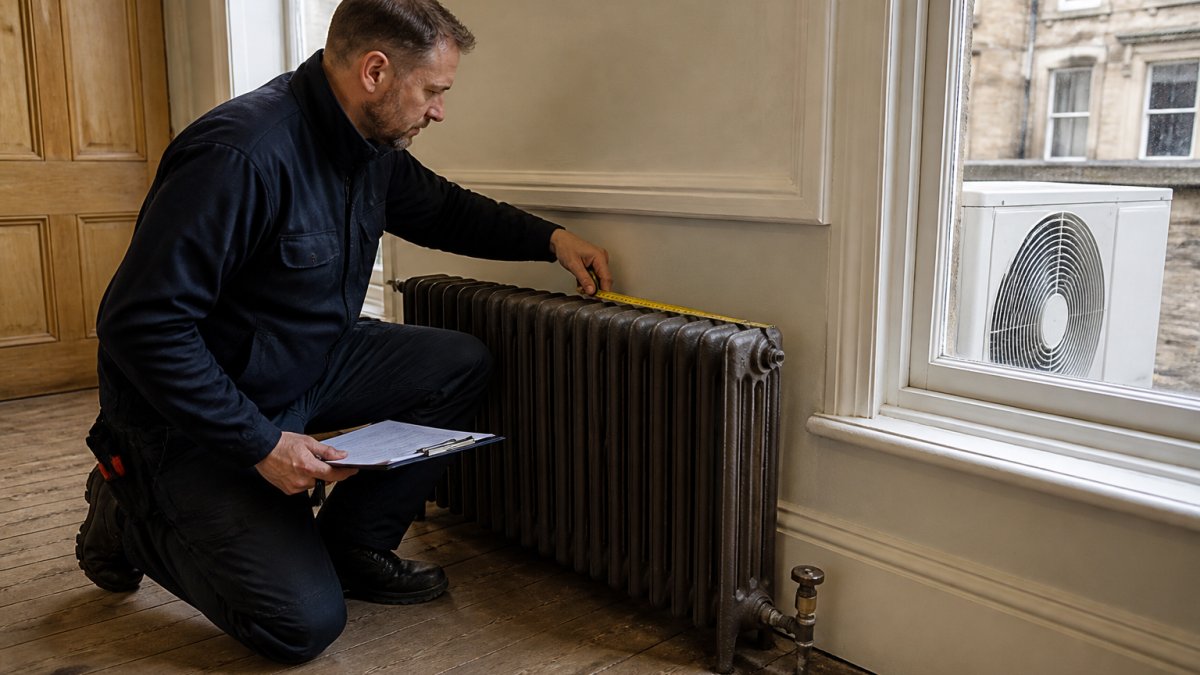
The mistake we see most often is a like-for-like swap. A designer replaces an old radiator with a new one of the same size and then wonders why the room never warms up.
Insulation for Heat Pumps: What Actually Pays Back
Insulation for heat pumps is not about chasing a perfect airtight house. It is about cutting the heat loss that forces your system to run hot.
The measures that usually give the best return in older properties:
- Loft insulation, topped up to current recommended depths
- Draught-proofing around windows, doors and skirting
- Suspended floor insulation where access allows
- Cavity wall insulation where a cavity exists and the property is suitable
Solid wall insulation is the big one, and it is expensive. It can transform a cold stone house, but the payback is long and the disruption is real. We would always discuss it honestly rather than push it.
The Energy Saving Trust guidance on home insulation is a sensible starting point for weighing up costs and benefits.
Solid Walls, Tenements and Other Awkward Construction
Stone-built solid walls, tenement flats and listed properties all throw up their own problems. None of them rule out a heat pump, but each needs a tailored approach.
Solid walls lose heat steadily and cannot take cavity insulation. Internal wall insulation is an option but eats floor space and needs careful detailing to avoid damp.
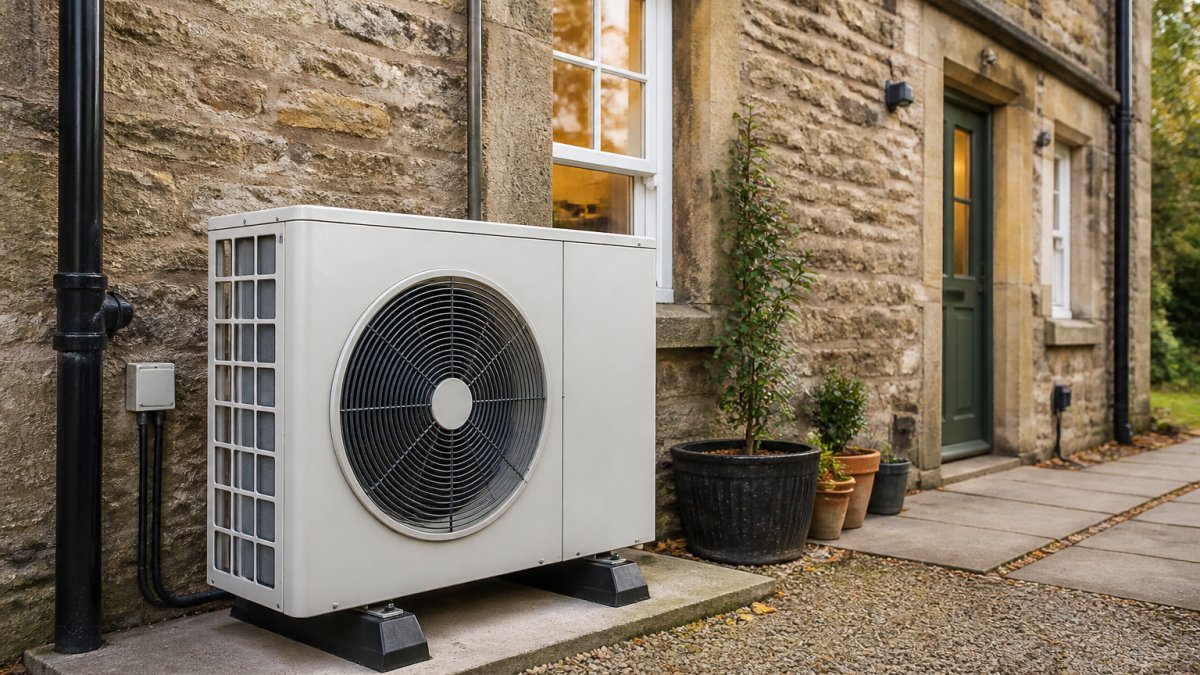
Tenements bring shared walls, communal stairs and awkward outdoor space for a unit. We often see good results with a unit sited on a flat roof, a rear wall or a garden, subject to permissions.
Listed buildings need consent for external changes. Internal solutions and careful siting usually work.
The UK government guidance on heat pumps and planning is worth reading before you commit to an outdoor unit position.
What most guides miss is that the outdoor unit location matters as much as the indoor design. Poor siting means poor performance, whatever the spec sheet says.
Common Mistakes That Undermine Heat Pump Efficiency in Older Homes
The same errors come up again and again. Avoiding them is worth more than any single upgrade.
| Mistake | Why it hurts | What to do instead |
|---|---|---|
| Sizing from floor area | Unit runs short or cycles | Commission a full heat loss calculation |
| Keeping old radiators | Rooms never reach temperature | Resize emitters for low flow temperatures |
| Skipping draught proofing | Heat loss stays high | Seal gaps before sizing the system |
| High flow temperature | Efficiency drops | Design for the lowest flow temperature that works |
| Poor unit siting | Restricted airflow, noise | Site away from walls and bedrooms |
| No commissioning record | Problems go unnoticed | Ask for flow and return temperatures in writing |
Two more habits are worth calling out. First, running the system like a boiler, with big on-off swings, wastes the efficiency you paid for. Second, ignoring the controls means the heat pump never learns the building's rhythm.
A well-designed system runs low and slow. That is how you get the efficiency figures the industry talks about.
If you want an independent view on what your property needs, our team at Castle Rock Plumbing heating and renewables can carry out a survey and explain the options before any work begins.
A heat pump in an older property is a design problem, not a lost cause. Get the heat loss calculation right, size the emitters for a low flow temperature, and deal with the cheap insulation first. Do that and the system will run as it should.
Castle Rock Plumbing heating and renewables provides Gas Safe registered heating and renewable energy work across the area, from heat loss surveys to full heat pump installation and servicing. We explain the scope and agree it with you before work starts, and we are happy to talk through what your property actually needs.
Get a boiler or heat pump quote from Castle Rock Plumbing heating and renewables and find out what your home is capable of.
Frequently Asked Questions
Are heat pumps efficient in older homes?
Yes, when the system is designed for the building. Heat pump efficiency drops when a unit is asked to run at high flow temperatures, so older properties usually need a proper heat loss calculation, larger radiators and some insulation work first. A well-specified system in a stone-built or solid-wall home can still deliver good efficiency, but the design stage matters far more than it does in a new build. Get a room-by-room assessment before committing to a specification.
Does an older home need better insulation before installing a heat pump?
Not always, but insulation for heat pumps is usually the cheapest way to improve performance. Loft insulation and draught-proofing are low-cost jobs with a quick payback. Solid wall insulation costs more and is not always necessary to make a heat pump viable. The right sequence is a heat loss calculation first, then decide which improvements give the best return. Some homes need only minor fabric upgrades, while others need more before a heat pump makes financial sense.
Can heat pumps work with existing radiators?
Often yes, but rarely all of them unchanged. Heat pumps and radiators work best together at lower flow temperatures, which means radiators need to be sized to emit enough heat at that lower temperature. Many older homes need two or three radiators upsized, usually the ones in the coldest or largest rooms. A heat loss calculation tells you which ones. Keeping every original radiator and hoping for the best is the most common reason a retrofit underperforms.
What flow temperature should a heat pump use?
Most well-designed systems aim for a heat pump flow temperature of around 45°C or lower, and some reach 35°C in well-insulated properties. Older homes with original radiators may need 50°C to 55°C, which reduces efficiency but still works. Every degree counts: running at 45°C instead of 55°C typically improves performance noticeably. The target should be set by the heat loss calculation, not picked in advance.