Last Updated: November 8, 2026
Quick Summary
A banging boiler is most often caused by kettling, where limescale builds up on the heat exchanger and traps water that boils and expands against the metal. Sludge, trapped air, restricted flow and delayed ignition can also make your boiler bang. Bleed your radiators first, then call a Gas Safe engineer if the noise persists.
- Kettling usually starts as a low rumble before turning into a full clang.
- Sludge needs a power flush to clear it properly, not just bleeding.
- Bleed radiators starting with the one furthest from the boiler.
- A bang right at start-up points to delayed ignition, so call an engineer.
- Anything involving gas, the burner, the flue or the sealed casing is Gas Safe work only.
Table of Contents
- 1. Kettling: The Most Common Cause of a Banging Boiler
- 2. Sludge and Debris Blocking the Heat Exchanger
- 3. Trapped Air and Airlocks in the System
- 4. Restricted Water Flow and Low Pressure
- 5. Why Your Boiler Bangs When the Heating Comes On
- 6. How to Fix a Noisy Boiler: Safe Checks and What to Leave Alone
- 7. When to Call a Boiler Engineer
- Book a Gas Safe Boiler Diagnosis with Castle Rock
- Frequently Asked Questions
1. Kettling: The Most Common Cause of a Banging Boiler
If your boiler is making a banging noise, kettling is the first suspect we check. Boiler kettling happens when limescale builds up on the heat exchanger, trapping water in a narrow space where it boils and expands against the metal. The noise usually starts as a low rumble before turning into a full clang.
The sound is your boiler telling you the heat exchanger is working harder than it should. Left alone, limescale thickens, efficiency drops, and the banging gets louder. A banging boiler from kettling needs a proper chemical flush or descale, not a quick fix. As Ideal Heating's guidance on boiler noise explains, the link between limescale and the heat exchanger is well established.
2. Sludge and Debris Blocking the Heat Exchanger
Sludge is the black, iron-rich sediment that collects in older heating systems, and it is a frequent cause of a knocking noise as it blocks narrow passages in the heat exchanger. When water can't flow freely, it overheats in pockets and bangs against the pipework. A common mistake is assuming a noisy system just needs bleeding. In practice, sludge needs a power flush to clear it properly.
Wondering whether regular servicing prevents this build-up? Our guide on whether an annual boiler service is worth it weighs up the cost against breakdown risk.
3. Trapped Air and Airlocks in the System
Air trapped in the system is the easiest cause to rule out and one of the most common. When air pockets form in the pipework or radiators, water circulation becomes uneven, producing gurgling, clanging and banging as the boiler fires up. Bleeding your radiators is a safe check most homeowners can do.
The sound is the giveaway. Air tends to produce a wet, gurgling rattle that moves around the system, often loudest at the top of radiators or near the pump, and it may settle for a while after the heating has run. That is different from the hard, metallic clang of kettling or the low thud of delayed ignition, and it is worth listening carefully before you reach for a radiator key.
A simple sequence helps you narrow it down:
- Bleed each radiator in turn, starting with the one furthest from the boiler and working back towards it.
- Note whether the noise changes, moves or disappears after each radiator is bled.
- Check the pressure gauge after bleeding, because releasing air lowers system pressure and you may need to top up to the manufacturer's cold-fill figure.
- Run the heating for a day and listen again.
If the noise returns within days of bleeding, air is getting in somewhere. That points to a leak, a failed automatic air vent, a faulty pump or a component drawing air into the system, and it needs a qualified heating engineer to trace the source rather than repeated bleeding.
Watch out: if you find yourself bleeding the same radiator every few weeks, stop treating it as routine maintenance. Repeated air ingress can corrode the system from the inside, and the sooner the source is found the cheaper the repair is likely to be.
4. Restricted Water Flow and Low Pressure
Restricted water flow or low water pressure makes the boiler overheat and bang because water isn't moving through the system fast enough. A blockage or a failing pump can both cause this. Before assuming the worst, check your boiler's pressure gauge. Our step-by-step guide on how to check boiler pressure at home safely shows you where to find the gauge and how to read it cold.
Watch out: never top up pressure repeatedly without finding the cause. If you're adding water weekly, something is leaking.
5. Why Your Boiler Bangs When the Heating Comes On
A boiler banging when heating comes on usually points to delayed ignition or rapid temperature changes. When the burner fires up late, gas builds up and ignites with a small thud or bang. A faulty thermostat can also cause overheating and sudden temperature swings that make pipes expand and knock.
The timing is the clue. If the bang happens right at start-up, suspect ignition. If it happens as the system heats through, suspect expansion, air, or sludge.
6. How to Fix a Noisy Boiler: Safe Checks and What to Leave Alone
You can safely check a few things yourself before calling anyone. Beyond those, leave the boiler casing alone. The dividing line matters: anything involving gas, the burner, the flue or the sealed casing is work reserved by law for a Gas Safe registered engineer, and getting it wrong risks carbon monoxide exposure as well as an expensive repair.
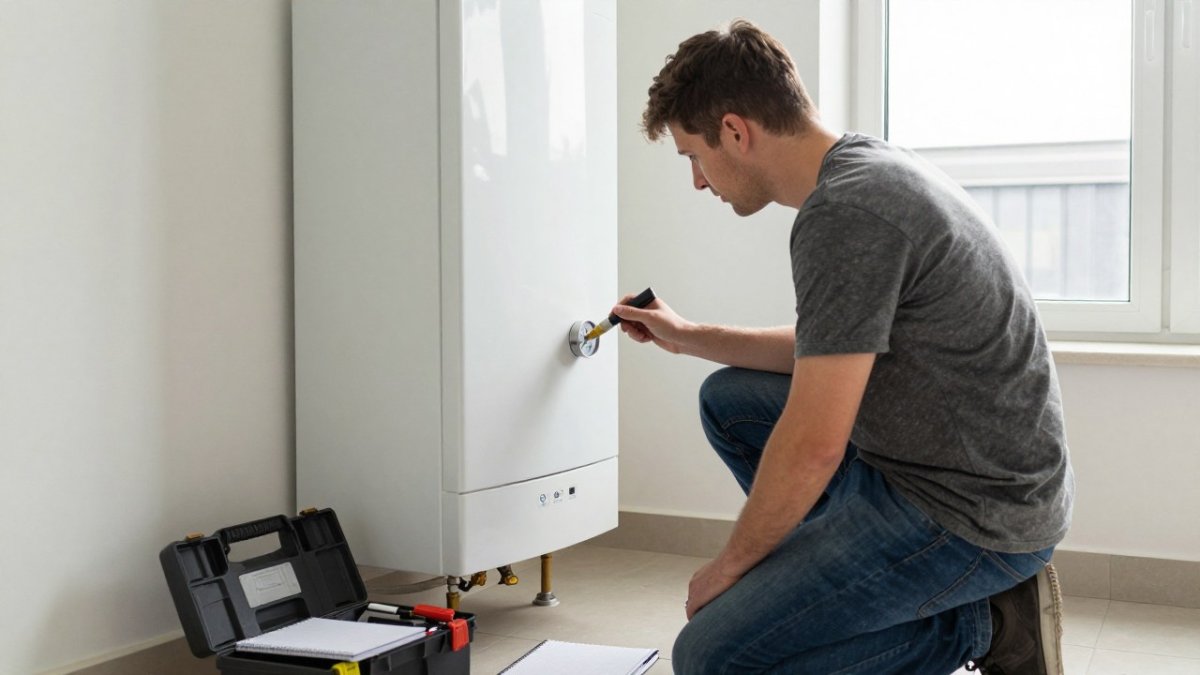
Safe checks you can do, and what each one tells you:
- Bleed the radiators. Open the bleed valve at the top of each radiator with a radiator key until water runs steadily, then close it. If the noise eases, trapped air was involved. If it returns within days, air is entering the system somewhere.
- Read the pressure gauge. Note the reading with the system cold. Check your boiler manual for the manufacturer's cold-fill pressure figure. A reading that keeps falling points to a leak or a faulty component.
- Confirm the thermostat setting. Make sure the heating and hot water are set as you expect and that the programmer is not calling for heat at odd times. A thermostat that is out of step with the programmer can cause short cycling and temperature swings.
- Listen to pinpoint where the noise starts. A bang at the boiler casing, a clang in the pipework under the floor, or a gurgle at a radiator all point in different directions, and telling an engineer what you heard saves diagnosis time.
- Check the fault code. If the display shows a code, note it down and look it up in the manual. Do not reset it repeatedly to clear the noise.
What to leave alone: the boiler casing, the gas supply, the burner, the flue and any internal component. How to fix a noisy boiler beyond these checks is a job for a Gas Safe registered engineer, and removing the casing on a sealed boiler can breach the manufacturer's instructions as well as the gas safety rules.
Watch out: if you smell gas, hear a bang followed by a shutdown, or your carbon monoxide alarm sounds, do not run through checks. Turn the boiler off at the controls, open windows, avoid touching electrical switches, and call the gas emergency line. Those signs are not a maintenance issue.
7. When to Call a Boiler Engineer
Call a boiler engineer when the noise persists after bleeding, when pressure keeps dropping, or when you smell gas or see a fault code. These are signs of a faulty component or a safety issue that needs professional diagnosis. Before you book anyone, verify their Gas Safe registration using the official register.
For urgent faults, our boiler repair service covers no heating, hot water problems and fault codes across the area.
| Noise | Likely Cause | Urgency |
|---|---|---|
| Low rumble, then banging | Kettling (limescale) | Book a service |
| Clanging in pipework | Sludge or debris | Book a power flush |
| Gurgling and banging | Trapped air | Bleed radiators first |
| Bang at start-up | Delayed ignition | Call an engineer |
| Whistling or rattling | Restricted flow or pump fault | Call an engineer |
Book a Gas Safe Boiler Diagnosis with Castle Rock
A banging boiler rarely fixes itself, and the longer you wait, the more the underlying cause costs to put right. Our Gas Safe registered engineers diagnose the noise source, explain what we find, and agree the scope with you before any work starts. We handle boiler installation, servicing and repairs for homes and businesses.
Get started with Castle Rock Plumbing, Heating & Renewables and arrange your boiler diagnosis today.
Frequently Asked Questions
Why is my boiler making a banging noise?
The most common cause of a banging boiler is kettling, where limescale builds up on the heat exchanger and causes water to boil unevenly. Sludge and debris in the system, trapped air, restricted water flow and a faulty thermostat can all produce the same noise. Each cause needs a different fix, which is why a Gas Safe registered engineer should inspect the boiler before any repair is agreed.
Is a banging boiler dangerous?
A banging boiler is not automatically an emergency, but it should never be ignored. Kettling and sludge usually point to wear that gets worse over time, while delayed ignition or overheating can present a genuine safety risk. If you also notice a smell of gas, soot, a yellow flame or a boiler that keeps locking out, turn it off and call a Gas Safe registered engineer immediately.
Can I keep using my boiler if it is banging?
Short-term use is usually fine while you arrange an inspection, but continued banging under load puts stress on the heat exchanger and pipework. If the noise is getting louder, the boiler is overheating, or you see pressure dropping repeatedly, switch it off and book a diagnosis. Running a failing boiler for weeks often turns a minor repair into a full replacement.
Why does my boiler bang when the heating comes on?
Noise at start-up usually points to rapid temperature changes, trapped air moving through the pipework, or a pump that is struggling to circulate water. Sludge and limescale make this worse because the boiler has to work harder to heat the system. A power flush, a proper bleed and a pump check will usually settle the noise once the underlying cause is confirmed.
How do I stop my boiler from banging?
Start with safe checks: bleed the radiators, confirm the pressure gauge sits at the level stated in the manual, and check that the thermostat is set sensibly. If the noise returns, the fix is usually a system flush, descaling or a component repair, which needs a Gas Safe registered engineer. Book a boiler service and ask for the noise to be investigated as part of the visit.
