Last Updated: 30 October 2026
Quick Summary
A landlord gas safety certificate is the record proving every gas appliance, flue and pipework in a rented property has been inspected by a Gas Safe registered engineer within the last 12 months. The check is a legal duty and must be repeated every 12 months, with no grace period once a certificate lapses.
- Every rented property with a gas supply needs an annual gas safety check.
- The certificate is valid for 12 months from the inspection date, with no grace period.
- Give new tenants a copy of the current certificate before they move in.
- If a tenant refuses access, send written requests and keep a record of every attempt.
- An immediately dangerous appliance is capped off or disconnected on the spot.
Table of Contents
- What a Landlord Gas Safety Certificate Is and Why It Matters
- Which Properties and Appliances Need a Gas Safety Check
- What Is Checked on a Gas Safety Certificate
- How Often Do Landlords Need a Gas Safety Certificate
- Landlord Gas Safety Certificate Cost and What Affects It
- Record Keeping, Deadlines and Giving Tenants a Copy
- When Access Is Refused and How to Document Reasonable Steps
- Unsafe Appliances, Defects and Follow-Up Actions
- Frequently Asked Questions
What a Landlord Gas Safety Certificate Is and Why It Matters
A landlord gas safety certificate is the record that proves every gas appliance, flue and pipework in a rented property has been inspected by a Gas Safe registered engineer within the last 12 months. It is not optional paperwork. It is a legal duty, and failing to hold one puts tenants at risk and landlords in front of a court.
The certificate itself is a single-page record, often called a CP12. It lists the property address, the engineer's details, each appliance checked, any safety defects found, and the actions taken. Landlords often ask the same questions: what needs checking, when, and what happens if something fails. Landlord gas safety in Edinburgh covers booking the inspection, boiler servicing and plumbing enquiries for rental properties in Edinburgh and the Lothians.
The Legal Basis for the Certificate
The duty to have gas appliances and flues checked in rented property is set out in gas safety legislation for Great Britain. Landlords should confirm the current requirements, including check frequency and record keeping, with the official government guidance. The obligation is statutory, not contractual, and a tenancy agreement cannot waive it.
Which Properties and Appliances Need a Gas Safety Check
Every rented property with a gas supply needs an annual check. That covers flats, houses, HMOs, and commercial premises let to tenants. The appliances in scope are those the landlord provides: boilers, gas hobs, ovens, fires, and water heaters. Portable appliances owned by the tenant are generally the tenant's responsibility, though pipework and flues serving the property remain the landlord's.
- Permanent appliances: boilers, cookers, fires, and wall heaters supplied with the let
- Pipework: visible gas pipes and any associated fittings
- Flues: the route by which combustion gases leave the appliance
- Exemptions: no gas supply means no gas safety certificate, but other safety duties still apply
One boundary worth knowing: if a tenant installs their own gas appliance, the landlord's duty does not automatically extend to it, but the landlord still cannot ignore a known danger.
What Is Checked on a Gas Safety Certificate
An inspection covers three things: gas appliances, gas pipework, and flues. The engineer checks that gas is burning safely, that there are no leaks, that ventilation is adequate, and that flue gases are escaping correctly. The results, including any defects and the engineer's details, are recorded on the certificate.
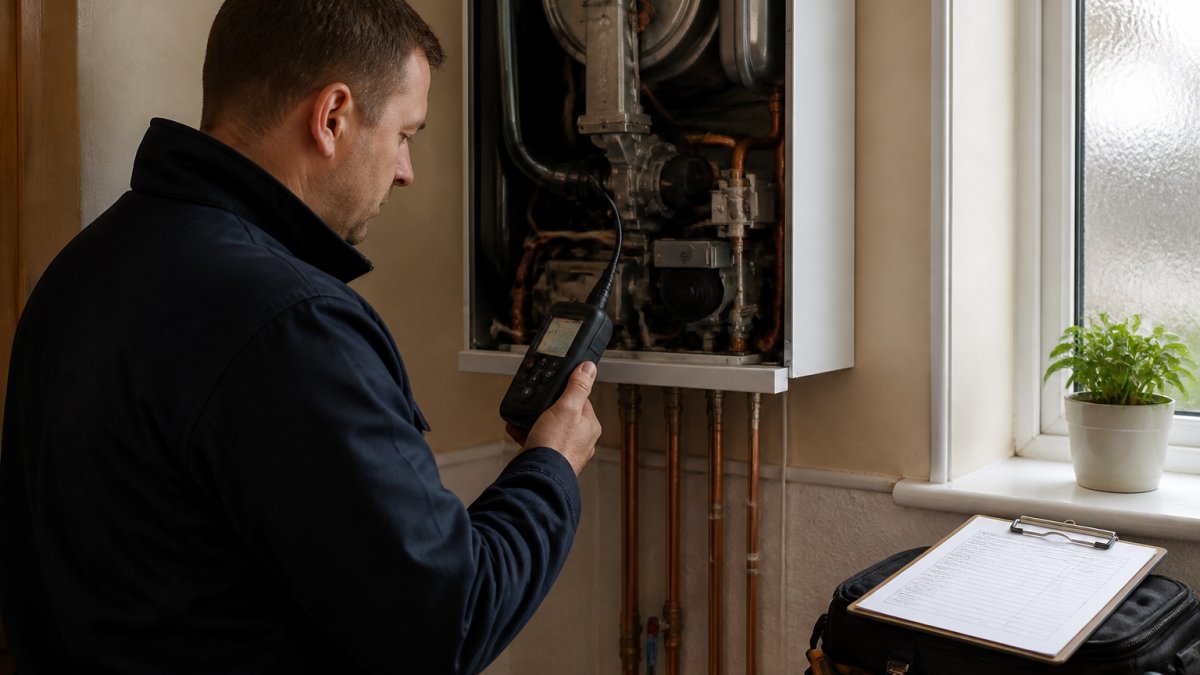
The engineer will test each appliance, inspect the pipework for leaks and soundness, and confirm the flue is clear and correctly terminated. If you want to verify the person carrying out the work, our guide on how to verify Gas Safe registration step by step walks through checking an ID card and searching the register.
How Often Do Landlords Need a Gas Safety Certificate
Landlords need a gas safety check every 12 months, with a new certificate issued after each inspection. The certificate is valid for 12 months from the inspection date, and the renewal must be arranged before the current one expires. There is no grace period: a lapsed certificate is a breach.
The practical rhythm is straightforward. Diarise the renewal a month ahead, book the check, and keep the previous certificate on file. Many landlords pair the gas safety check with an annual boiler service, since both involve the same engineer and the same visit. If you want to arrange that alongside the check, you can book a boiler service enquiry and send the boiler model and postcode.
The key timings for the check and certificate are simple to diarise.
| Item | Value | Note |
|---|---|---|
| Gas safety check frequency | Every 12 months | A new certificate is issued after each inspection |
| Certificate validity | 12 months from the inspection date | Renewal must be arranged before it expires |
| Grace period | None | A lapsed certificate is a breach |
| Renewal reminder | A month ahead | Diarise, book the check, keep the previous certificate |
| Boiler service | Same annual visit | Many landlords pair it with the gas safety check |
Landlord Gas Safety Certificate Cost and What Affects It
There is no single fixed price for a landlord gas safety certificate. What you pay depends on the property, the number of appliances, and whether the visit includes a service. Larger properties, HMOs with multiple boilers, and premises with commercial catering appliances generally cost more because each additional appliance adds inspection time and paperwork.
What moves the price:
-
Number of appliances: each additional appliance adds to the engineer's time on site and the entries on the CP12.
-
Access and condition: pipework that is boxed in, flues that are awkward to reach, or appliances in poor condition take longer to inspect.
-
Service add-on: combining the safety check with an annual boiler service usually costs less than booking two separate visits, because the engineer is already on site.
-
Urgency: a same-day or out-of-hours callout typically carries a premium over a pre-booked appointment.
Prices depend on the property and the work involved. Contact Castle Rock Plumbing heating and renewables with the property details, the number of gas appliances, and your postcode for a quote before any work begins.
One cost worth factoring in: if the check uncovers a defect, the repair is a separate job, so it is sensible to budget for a contingency.
Record Keeping, Deadlines and Giving Tenants a Copy
The record-keeping rules are precise, and the deadlines are where landlords most often slip up. Here is the timeline in full.
The pre-occupation rule for new tenants. A new tenant must receive a copy of the current gas safety certificate before they move in (Gas safety check records and what to keep).
Record retention. Landlords should keep records of each gas safety check for the period set by current guidance, which usually means retaining the current certificate alongside previous ones.
A simple timeline for a check completed on a given date:
- Check completed, new CP12 issued.
- Copy given to existing tenants, within the timescale set by current guidance.
- Before any new tenancy starts, copy given to the incoming tenant before they move in.
- Retention, current and previous certificates kept for the period set by current guidance.
Practical record keeping. A digital folder with a subfolder for each property, holding the current CP12, previous certificates, and a log of the dates each was issued and given to tenants, is a practical approach. Keep the tenant communication, such as an email or a signed receipt, as evidence the copy was provided.
Scenarios worth knowing. If a tenant moves out, records should still be kept in line with current guidance. If a property changes hands, request the previous certificates as part of the handover.
When Access Is Refused and How to Document Reasonable Steps
If a tenant refuses access, the landlord should take reasonable steps and keep evidence of them. The key word is reasonable, and the key task is evidence. Send written requests, offer multiple appointment times, and keep a record of every attempt.
A practical evidence trail:
- Written notice of the proposed inspection date, sent in advance
- Follow-up messages offering alternative times
- A record of any refusal, in the tenant's own words where possible
- A note of the action taken once access is eventually granted
If access is being blocked repeatedly, contact us to rearrange the visit and keep the paper trail intact. Documenting reasonable steps is what protects a landlord if the matter is ever reviewed.
Unsafe Appliances, Defects and Follow-Up Actions
When an appliance fails the check, the engineer classifies the defect. An immediately dangerous appliance is capped off or disconnected on the spot, and the tenant is informed. Other defects may be recorded as requiring attention, with a timescale for repair.
The landlord's duty is to act on the engineer's findings. If a repair bill lands, landlords often ask whether insurance covers it, and our article on whether boiler repair is covered by landlord insurance explains how policy wording varies.
Watch out: leaving a defective appliance in service because a repair is inconvenient is the single fastest way to turn a paperwork issue into an enforcement case.
Frequently Asked Questions
What is checked on a gas safety certificate?
A Gas Safe registered engineer checks every gas appliance, the pipework and the flues. For each appliance they confirm it is burning safely, that ventilation is adequate and that there are no leaks. They also test the gas tightness of the installation and check that safety devices work. Any defects are recorded on the certificate, and unsafe appliances are classified so you know what action is needed before the property can be let safely.
How often do landlords need a gas safety certificate?
Every 12 months. The annual gas safety check must be carried out by a Gas Safe registered engineer, and a new certificate is issued each time. Give a copy to existing tenants within the timescale set by current guidance and to new tenants before they move in. Keep records for the period set by current guidance so you can show compliance if asked. Renewing before the expiry date keeps the property legally let without a gap.
What happens if a landlord does not have a valid gas safety record?
Letting a property without a valid gas safety record is a criminal offence. You could face serious legal consequences, and your tenants may be able to take action against you. Check current official guidance for the penalties that apply. The safest approach is to arrange an inspection before the current certificate expires.
What should a landlord do if a tenant refuses access for a gas safety check?
You must take all reasonable steps to arrange the check. Write to the tenant with proposed dates, keep copies of every letter or email, and offer reasonable notice. If access is still refused, document your attempts and seek legal advice. Never force entry. A clear paper trail showing you tried to comply protects you if the matter is later questioned, and it shows you acted reasonably throughout.
Does a landlord gas safety certificate cover repairs?
No. The certificate records the results of the safety check, including any defects found. It does not pay for or carry out repairs. If the engineer identifies an unsafe appliance, you must arrange the repair or replacement with a Gas Safe registered engineer before the appliance is used again. Keep the repair paperwork with your gas safety record so you can show the defect was dealt with promptly.
Who can carry out a landlord gas safety check?
Only a Gas Safe registered engineer can carry out the check and issue a valid certificate. Always ask to see their Gas Safe ID card and check the registration number on the Gas Safe Register website. The card shows which types of work they are qualified for, such as boilers, cookers or flues. Using an unregistered engineer invalidates the certificate and puts you and your tenants at risk.
Compliance is not complicated, but it is unforgiving of missed dates and thin records. Castle Rock Plumbing heating and renewables provides Gas Safe registered engineers for landlord gas safety checks, boiler servicing and repairs, with clear communication on scope before any work begins. Get started with Castle Rock Plumbing heating and renewables and keep every rental property certified, documented and safe.
